☏ +91 86606 74458 +91 94480 33005

Sperm Count Improvement Therapy in Bangalore – Improving Male Fertility Through Personalized Care
Male fertility plays a crucial role in a couple's ability to conceive naturally. One of the most important indicators of male reproductive health is sperm count, along with sperm motility, morphology, and overall semen quality. A low sperm count does not always mean infertility, but it can significantly reduce the chances of successful conception. With timely diagnosis and appropriate treatment, many men experience noticeable improvements in fertility and reproductive health.
7/16/20263 min read
Sperm Count Improvement Therapy in Bangalore – Improving Male Fertility Through Personalized Care
Male fertility plays a crucial role in a couple's ability to conceive naturally. One of the most important indicators of male reproductive health is sperm count, along with sperm motility, morphology, and overall semen quality. A low sperm count does not always mean infertility, but it can significantly reduce the chances of successful conception. With timely diagnosis and appropriate treatment, many men experience noticeable improvements in fertility and reproductive health.
At Dr. Ravindra Parashetty Clinic, Bangalore, sperm count improvement therapy focuses on identifying the underlying causes of reduced sperm production and developing personalized treatment plans. Every individual is unique, and treatment recommendations are based on comprehensive evaluation, lifestyle assessment, medical history, and diagnostic findings.
What is Low Sperm Count?
Low sperm count, also known as oligospermia, refers to a lower-than-normal concentration of sperm in the semen. Since sperm production is influenced by hormones, overall health, and lifestyle factors, any disruption in these areas may affect fertility.
A healthy reproductive system requires:
Adequate sperm production
Good sperm motility
Normal sperm shape (morphology)
Healthy hormone levels
Proper reproductive organ function
Improving these factors may increase the likelihood of natural conception and enhance overall reproductive wellness.
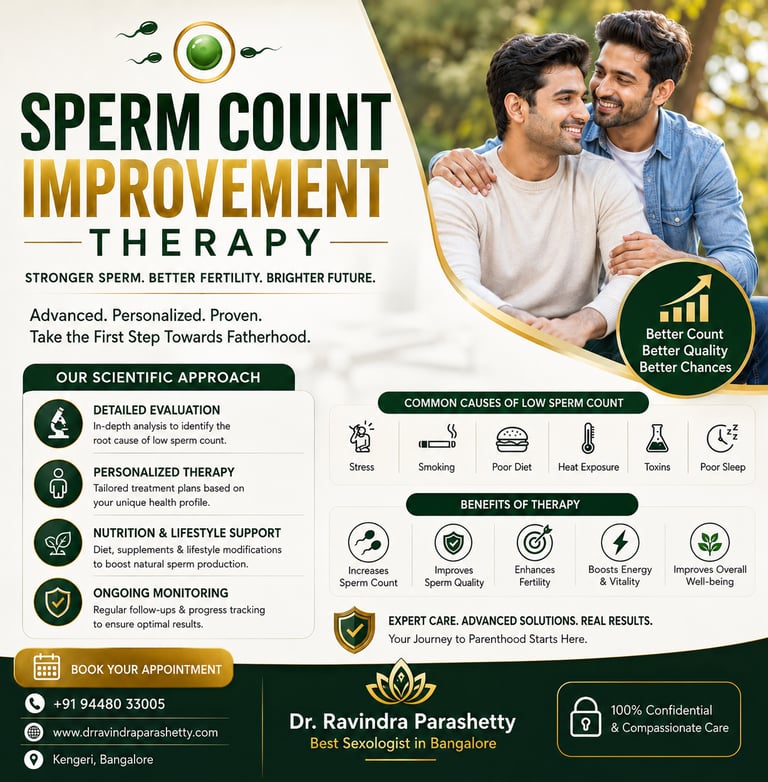
Common Causes of Low Sperm Count
Several medical and lifestyle factors can contribute to reduced sperm production, including:
Chronic stress
Smoking and tobacco use
Excessive alcohol consumption
Poor dietary habits
Obesity
Lack of regular physical activity
Hormonal imbalances
Varicocele (enlarged veins in the scrotum)
Certain infections
Exposure to excessive heat
Environmental toxins and chemicals
Some medications
Inadequate sleep
Identifying the underlying cause is essential for selecting the most appropriate treatment approach.
Signs That May Require Evaluation
Although many men with low sperm count have no obvious symptoms, medical evaluation is recommended if you experience:
Difficulty conceiving after regular unprotected intercourse
Reduced sexual desire
Erectile difficulties
Changes in semen quality
Testicular discomfort or swelling
Hormonal imbalance symptoms
History of reproductive disorders
Early diagnosis helps improve treatment outcomes and supports informed fertility planning.
Comprehensive Assessment
A detailed fertility assessment typically includes:
Medical History
Understanding previous illnesses, surgeries, medications, and lifestyle habits.
Physical Examination
Evaluation of reproductive health and any visible abnormalities.
Semen Analysis
Assessment of:
Sperm count
Motility
Morphology
Semen volume
Overall semen quality
Hormonal Evaluation
Blood tests may be recommended to assess reproductive hormone levels.
Additional Diagnostic Tests
Depending on individual findings, further investigations may be advised to determine the underlying cause.
Personalized Sperm Count Improvement Therapy
Treatment is customized according to each patient's medical condition, fertility goals, and overall health.
A personalized approach may include:
Lifestyle Modification
Healthy lifestyle changes play an important role in supporting sperm production.
Recommendations often include:
Maintaining a healthy body weight
Regular physical activity
Adequate sleep
Stress management
Avoiding smoking
Limiting alcohol consumption
Staying well hydrated
Nutritional Guidance
A balanced diet supports overall reproductive health.
Foods rich in antioxidants, vitamins, minerals, healthy fats, lean proteins, fruits, vegetables, nuts, seeds, and whole grains contribute to healthy sperm production and overall wellness.
Medical Management
If an underlying medical condition or hormonal imbalance is identified, appropriate medical treatment may be recommended. Treatment plans are based on individual clinical findings and are monitored regularly.
Ongoing Monitoring
Regular follow-up appointments help evaluate treatment progress, review semen analysis results, and adjust the treatment plan whenever necessary.
Benefits of Sperm Count Improvement Therapy
Personalized fertility care may help:
Improve sperm count
Enhance sperm motility
Support healthy sperm morphology
Improve reproductive health
Address underlying medical conditions
Promote healthy lifestyle habits
Increase confidence and overall well-being
Support natural conception whenever possible
Healthy Habits That Support Male Fertility
Simple lifestyle choices can make a positive difference over time.
Helpful habits include:
Eat a nutritious diet
Exercise regularly
Maintain an ideal body weight
Manage stress effectively
Get sufficient sleep
Avoid tobacco products
Limit alcohol intake
Stay physically active
Avoid prolonged heat exposure
Attend regular medical check-ups
Why Choose Dr. Ravindra Parashetty?
Patients seeking guidance for male reproductive health benefit from a personalized and confidential approach.
Highlights include:
Comprehensive fertility evaluation
Individualized treatment plans
Evidence-based medical care
Lifestyle and nutritional counseling
Confidential consultations
Regular monitoring and follow-up
Patient-focused care tailored to individual needs
The goal is to improve reproductive health while addressing the root causes affecting fertility.
Frequently Asked Questions
Is low sperm count always a sign of infertility?
No. Many men with low sperm count are still able to achieve pregnancy naturally, depending on other fertility factors.
Can lifestyle changes improve sperm health?
Healthy habits such as balanced nutrition, regular exercise, stress reduction, and avoiding smoking may positively influence sperm health.
How long does improvement take?
Sperm development occurs over several weeks. Improvements may take a few months depending on the individual's condition and treatment plan.
Is treatment different for every patient?
Yes. Treatment is personalized based on medical history, examination findings, laboratory investigations, and fertility goals.
When should I consult a specialist?
If pregnancy has not occurred after regular unprotected intercourse for an extended period or if you have concerns regarding male reproductive health, seeking professional evaluation is recommended.
Conclusion
Sperm Count Improvement Therapy focuses on enhancing male reproductive health through comprehensive evaluation, personalized treatment strategies, healthy lifestyle modifications, and ongoing medical guidance. Since every individual has different health needs, identifying the underlying cause is the first step toward effective management.
At Dr. Ravindra Parashetty Clinic, Bangalore, patients receive confidential, individualized care aimed at improving sperm health, supporting fertility, and promoting overall reproductive well-being. Early consultation and a structured treatment plan can make a meaningful difference in achieving long-term reproductive health goals.