☏ +91 86606 74458 +91 94480 33005

Low Sperm Count Treatment in Kengeri, Bangalore
Male infertility is a common yet often overlooked health condition that affects millions of couples worldwide. Among the various causes of male infertility, low sperm count remains one of the most significant factors responsible for difficulty in achieving pregnancy. Fortunately, modern medical advancements and lifestyle-based interventions have made it possible for many men to improve their reproductive health and increase their chances of fatherhood.
6/16/20265 min read
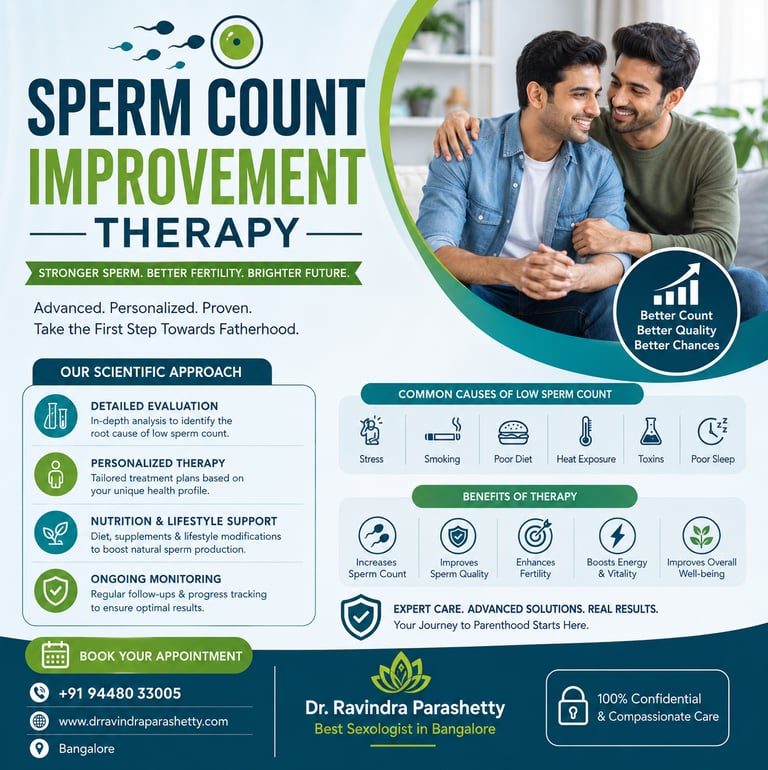
Low Sperm Count Treatment in Kengeri, Bangalore
Advanced Male Fertility Solutions by Dr. Ravindra Parashetty
Male infertility is a common yet often overlooked health condition that affects millions of couples worldwide. Among the various causes of male infertility, low sperm count remains one of the most significant factors responsible for difficulty in achieving pregnancy. Fortunately, modern medical advancements and lifestyle-based interventions have made it possible for many men to improve their reproductive health and increase their chances of fatherhood.
At Dr. Ravindra Parashetty's Clinic in Kengeri, Bangalore, we provide comprehensive evaluation and personalized treatment for low sperm count and poor sperm quality. Our approach focuses on identifying the root cause and providing evidence-based therapies aimed at restoring fertility naturally whenever possible.
Understanding Low Sperm Count
Low sperm count, medically known as oligospermia, refers to a condition in which the number of sperm present in semen is lower than normal. A healthy sperm count is important for successful fertilization because sperm cells must travel through the female reproductive tract and fertilize the egg.
According to international standards, a sperm concentration below 15 million sperm per milliliter is considered low.
Low sperm count does not necessarily mean infertility. Many men with reduced sperm concentration are still capable of fathering children, especially when appropriate treatment and lifestyle modifications are implemented.
Importance of Healthy Sperm
Successful conception depends on several factors related to sperm health, including:
Sperm concentration
Sperm motility
Sperm morphology
Semen volume
DNA integrity
Hormonal balance
Overall reproductive health
Improving these parameters can significantly enhance fertility potential and increase the likelihood of natural conception.
Causes of Low Sperm Count
Low sperm count may develop due to several lifestyle, environmental, hormonal, and medical factors.
Stress and Mental Health Issues
Excessive stress can negatively affect hormone production and interfere with sperm formation. Emotional stress, anxiety, depression, and chronic work-related pressure may contribute to reduced fertility.
Stress Can Lead To
Reduced testosterone levels
Lower libido
Erectile dysfunction
Hormonal imbalance
Decreased sperm production
Managing stress is an important aspect of male fertility treatment.
Smoking and Tobacco Use
Smoking is one of the major causes of poor sperm quality.
Tobacco toxins can result in:
Reduced sperm count
Poor sperm motility
DNA fragmentation
Abnormal sperm morphology
Increased oxidative stress
Quitting smoking can significantly improve reproductive health and overall well-being.
Poor Nutrition
Nutritional deficiencies can interfere with sperm production and hormonal function.
Important nutrients for male fertility include:
Zinc
Selenium
Vitamin C
Vitamin E
Vitamin D
Folate
Omega-3 fatty acids
Coenzyme Q10
A balanced diet provides the nutrients required for healthy sperm formation.
Heat Exposure
The testicles require a temperature slightly lower than body temperature for optimal sperm production.
Excessive heat exposure may occur due to:
Tight underwear
Hot baths
Steam rooms
Sauna use
Laptop placement on the lap
Long hours of sitting
Reducing heat exposure can improve sperm quality over time.
Exposure to Environmental Toxins
Environmental pollutants and industrial chemicals can affect male fertility.
Examples include:
Pesticides
Heavy metals
Radiation
Air pollution
Chemical solvents
Avoiding harmful substances may help preserve reproductive health.
Sleep Disorders
Poor sleep quality can disrupt hormonal balance and negatively impact sperm production.
Sleep deprivation is associated with:
Reduced testosterone levels
Increased stress hormones
Fatigue
Poor sexual health
Reduced fertility potential
Maintaining healthy sleep habits is essential for reproductive wellness.
Medical Conditions Associated with Low Sperm Count
Several health conditions can contribute to male infertility.
Varicocele
Varicocele refers to enlarged veins around the testicles and is one of the most common reversible causes of low sperm count.
Hormonal Disorders
Abnormal levels of testosterone, prolactin, thyroid hormones, and pituitary hormones can affect sperm production.
Infections
Certain infections can damage the reproductive tract and impair sperm function.
Examples include:
Epididymitis
Prostatitis
Sexually transmitted infections
Diabetes
Uncontrolled diabetes may lead to hormonal disturbances and ejaculatory problems.
Obesity
Excess body weight can reduce testosterone levels and impair sperm production.
Genetic Disorders
Inherited conditions may influence sperm development and reproductive function.
Symptoms of Low Sperm Count
Many men experience no symptoms apart from difficulty conceiving. However, some may notice:
Inability to achieve pregnancy
Reduced sexual desire
Erectile dysfunction
Testicular discomfort
Swelling around the testicles
Hormonal imbalance
Decreased body hair
Fatigue and low energy
Consulting a specialist can help identify the underlying cause and provide appropriate treatment.
Diagnosis of Low Sperm Count
Accurate diagnosis is the foundation of successful treatment.
At our clinic in Kengeri, Bangalore, evaluation includes:
Detailed Medical History
We assess:
Previous illnesses
Surgical history
Lifestyle factors
Fertility history
Sexual health concerns
Physical Examination
A thorough examination helps identify:
Varicocele
Hormonal abnormalities
Testicular disorders
Semen Analysis
This is one of the most important investigations for male fertility.
Parameters evaluated include:
Sperm count
Motility
Morphology
Semen volume
Liquefaction time
Hormonal Assessment
Blood tests may include:
Testosterone
Follicle-stimulating hormone (FSH)
Luteinizing hormone (LH)
Prolactin
Thyroid profile
Advanced Diagnostic Tests
Additional investigations may be recommended depending on individual needs.
Personalized Treatment for Low Sperm Count
Treatment is individualized based on the underlying cause and fertility goals.
Management may involve:
Medical therapy
Hormonal treatment
Antioxidant supplementation
Lifestyle modifications
Nutritional support
Stress reduction techniques
Treatment of infections
Management of chronic diseases
Our goal is to improve sperm production and optimize reproductive health.
Nutritional Support for Healthy Sperm
Proper nutrition plays a crucial role in sperm production.
Foods Rich in Zinc
Zinc supports testosterone production and sperm formation.
Sources include:
Pumpkin seeds
Nuts
Legumes
Whole grains
Antioxidant-Rich Foods
Antioxidants protect sperm cells from oxidative stress.
Examples include:
Tomatoes
Citrus fruits
Spinach
Berries
Protein Sources
Adequate protein intake is essential for hormone synthesis.
Healthy sources include:
Eggs
Fish
Chicken
Dairy products
Omega-3 Fatty Acids
Omega-3 fatty acids help improve sperm quality.
Foods rich in omega-3 include:
Salmon
Sardines
Walnuts
Flax seeds
Lifestyle Modifications for Better Fertility
Healthy habits can greatly improve reproductive health.
Exercise Regularly
Moderate exercise promotes:
Better blood circulation
Weight management
Hormonal balance
Maintain Healthy Weight
Obesity is associated with reduced fertility and low testosterone.
Quit Smoking
Stopping tobacco use can improve sperm quality and overall health.
Limit Alcohol Consumption
Excessive alcohol intake may impair sperm production.
Manage Stress
Techniques such as yoga, meditation, and counseling can support emotional and reproductive health.
Improve Sleep Quality
Seven to eight hours of restful sleep are essential for healthy testosterone production.
Antioxidant Therapy
Oxidative stress is a major contributor to sperm damage.
Supplementation may include:
Coenzyme Q10
Vitamin C
Vitamin E
Selenium
Zinc
Lycopene
L-Carnitine
These nutrients help improve sperm quality and protect reproductive cells.
Hormonal Therapy
Hormonal abnormalities may require targeted treatment.
Treatment aims to correct:
Testosterone deficiency
Elevated prolactin
Thyroid dysfunction
Pituitary disorders
Restoring hormonal balance can enhance sperm production and fertility potential.
Ongoing Monitoring
Regular follow-up is essential to evaluate treatment progress.
Monitoring may include:
Repeat semen analysis
Hormonal testing
Clinical assessment
Modification of treatment plans
Continuous monitoring helps ensure optimal outcomes.
Benefits of Low Sperm Count Treatment
Improved Sperm Count
Therapy stimulates healthy sperm production.
Better Sperm Quality
Enhanced motility and morphology increase fertility potential.
Increased Chances of Natural Pregnancy
Optimizing sperm health improves the likelihood of successful conception.
Improved Sexual Health
Hormonal balance often leads to enhanced libido and better overall well-being.
Increased Confidence
Successful treatment can positively affect emotional and psychological health.
When Should You Seek Medical Advice?
Consult a specialist if:
Pregnancy has not occurred after one year of regular unprotected intercourse.
You have erectile dysfunction.
You experience low libido.
You have testicular pain or swelling.
You have undergone reproductive surgery.
You have diabetes or hormonal disorders.
There is a history of infertility.
Early diagnosis can significantly improve treatment success.
Why Choose Dr. Ravindra Parashetty in Kengeri, Bangalore?
Comprehensive Evaluation
Detailed assessment helps identify the exact cause of fertility problems.
Individualized Treatment Plans
Each patient receives a customized approach tailored to his needs.
Evidence-Based Medical Care
Modern diagnostic and therapeutic methods ensure quality treatment.
Long-Term Follow-Up
Regular monitoring helps maximize treatment outcomes.
Confidential and Compassionate Care
Patient privacy and comfort remain our highest priorities.
Best Low Sperm Count Specialist in Kengeri, Bangalore
Male infertility is treatable in many cases. With early diagnosis, lifestyle changes, and appropriate medical intervention, significant improvements in sperm count and sperm quality are possible.
If you are experiencing fertility concerns, expert guidance can help you move closer to your dream of parenthood.
Book Your Appointment Today
Dr. Ravindra Parashetty
Best Sexologist and Male Fertility Specialist in Kengeri, Bangalore
Services Offered
Low Sperm Count Treatment
Male Infertility Treatment
Erectile Dysfunction Treatment
Premature Ejaculation Treatment
Sexual Wellness Counseling
Men's Health Evaluation
Hormonal Assessment
Lifestyle and Nutrition Guidance
📞 Call: +91 94480 33005
🌐 Website: www.drravindraparashetty.com
📍 Location: Kengeri, Bangalore, Karnataka
Expert Care. Advanced Solutions. Real Results.
Your Journey Towards Fatherhood Starts Here.
100% Confidential and Compassionate Care.