☏ +91 86606 74458 +91 94480 33005

Low Sexual Desire Treatment in Bangalore – Understanding Causes, Symptoms, Diagnosis, and Personalized Care
A healthy intimate life contributes significantly to emotional well-being, self-confidence, and relationship satisfaction. However, many individuals experience a gradual decline in sexual desire, commonly referred to as low sexual desire or low libido. This condition can affect both men and women at any stage of adulthood and may result from physical, hormonal, psychological, or lifestyle-related factors.
7/6/20264 min read
Low Sexual Desire Treatment in Bangalore – Understanding Causes, Symptoms, Diagnosis, and Personalized Care
Introduction
A healthy intimate life contributes significantly to emotional well-being, self-confidence, and relationship satisfaction. However, many individuals experience a gradual decline in sexual desire, commonly referred to as low sexual desire or low libido. This condition can affect both men and women at any stage of adulthood and may result from physical, hormonal, psychological, or lifestyle-related factors.
Occasional changes in sexual interest are normal, but when a reduced desire persists for several months and begins to affect relationships or quality of life, professional medical evaluation is recommended. Early diagnosis helps identify the underlying cause and allows for appropriate treatment tailored to the individual's needs.
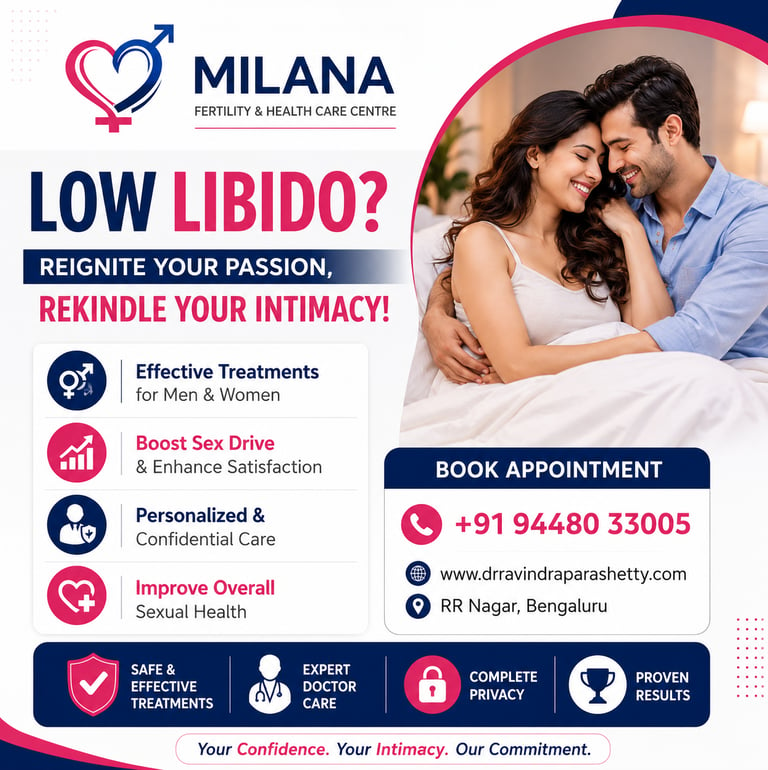
At Milana Fertility & Health Care Centre, Bangalore, experienced healthcare professionals provide confidential assessment and personalized treatment plans to help patients improve their sexual health and overall well-being.
What is Low Sexual Desire?
Low sexual desire is a condition in which an individual experiences a persistent decrease in interest in sexual activity. Unlike temporary fluctuations caused by stress or fatigue, long-term low libido may indicate an underlying medical or emotional concern.
It can occur in:
Men
Women
Married couples
Young adults
Middle-aged individuals
Older adults
Every individual has a different level of sexual interest, so treatment is recommended only when the condition causes personal distress or relationship difficulties.
How Sexual Desire Works
Sexual desire is influenced by several interconnected systems within the body.
These include:
Hormonal balance
Brain function
Emotional health
Blood circulation
Nervous system health
Relationship quality
Physical fitness
Lifestyle habits
A disruption in one or more of these areas may reduce sexual interest.
Common Reasons for Low Sexual Desire
Several factors may contribute to reduced libido.
Hormonal Changes
Hormones play an important role in maintaining sexual interest.
Low levels of testosterone in men and changes in estrogen levels in women can affect sexual desire.
Stress
Long-term stress increases cortisol production, which may interfere with normal hormone function and reduce intimacy.
Anxiety
Performance anxiety, work pressure, financial concerns, and emotional stress often contribute to reduced libido.
Depression
Depression affects mood, energy, motivation, and overall interest in activities, including intimacy.
Relationship Issues
Poor communication, emotional distance, unresolved conflicts, and lack of trust may reduce sexual desire.
Chronic Illness
Medical conditions such as:
Diabetes
Hypertension
Heart disease
Kidney disorders
Thyroid disease
can affect libido.
Obesity
Excess body weight may alter hormone levels, reduce confidence, and affect overall sexual health.
Lack of Physical Activity
Regular exercise supports circulation and hormonal health.
A sedentary lifestyle may reduce energy and sexual interest.
Poor Sleep
Sleep disturbances interfere with hormone production and emotional health.
Certain Medications
Some prescription medications may influence sexual desire.
Examples include:
Antidepressants
Blood pressure medicines
Hormonal medications
Pain management drugs
Low Sexual Desire in Men
Men may experience reduced libido because of:
Low testosterone
Erectile dysfunction
Diabetes
Obesity
Chronic stress
Anxiety
Depression
Alcohol consumption
Smoking
Sleep disorders
Some men also experience reduced confidence because of previous sexual difficulties, leading to decreased desire.
Low Sexual Desire in Women
Women may experience low libido because of:
Pregnancy
Childbirth
Breastfeeding
Menopause
Hormonal imbalance
Vaginal discomfort
Emotional stress
Relationship concerns
Thyroid disorders
PCOS
Female sexual health is influenced by physical, emotional, and hormonal factors working together.
Symptoms
Symptoms vary among individuals.
Common symptoms include:
Reduced interest in intimacy
Fewer sexual thoughts
Difficulty becoming aroused
Lack of satisfaction
Emotional frustration
Reduced confidence
Relationship stress
Avoidance of physical intimacy
Persistent loss of desire
Risk Factors
Individuals may have a higher risk if they have:
Diabetes
Obesity
High blood pressure
Hormonal disorders
Depression
Anxiety
Chronic stress
Poor sleep habits
Smoking habit
Excessive alcohol consumption
Complications
Untreated low sexual desire may contribute to:
Emotional distress
Reduced self-esteem
Marital conflicts
Relationship dissatisfaction
Anxiety
Depression
Reduced quality of life
When Should You Consult a Doctor?
Medical consultation is recommended if:
Symptoms persist for several months.
Sexual desire has decreased significantly.
Intimacy is affecting your relationship.
You experience erectile difficulties.
Hormonal symptoms are present.
You have pain during intercourse.
Emotional distress develops because of reduced libido.
Diagnosis
Proper diagnosis helps identify the root cause.
Evaluation usually includes:
Detailed Medical History
Your doctor may discuss:
Current symptoms
Medical illnesses
Lifestyle habits
Emotional health
Medications
Relationship concerns
Physical Examination
General health assessment helps identify medical conditions affecting sexual wellness.
Laboratory Tests
Depending on the symptoms, investigations may include:
Testosterone
Estrogen
Thyroid profile
Blood sugar
Cholesterol
Vitamin levels
Complete hormonal evaluation
Psychological Assessment
Mental health assessment helps identify:
Stress
Anxiety
Depression
Relationship concerns
Treatment Options
Treatment depends on the underlying cause rather than symptoms alone.
Lifestyle Changes
Healthy habits often improve sexual health naturally.
Recommended changes include:
Regular exercise
Healthy body weight
Balanced nutrition
Adequate sleep
Stress reduction
Smoking cessation
Reduced alcohol intake
Hormonal Management
When hormone deficiency is confirmed through medical evaluation, appropriate treatment may be advised by the healthcare provider.
Medical Treatment
Managing underlying diseases such as diabetes, thyroid disorders, hypertension, and obesity often improves libido.
Counseling
Professional counseling helps patients address:
Emotional concerns
Performance anxiety
Relationship difficulties
Stress management
Couples counseling may also improve communication and intimacy.
Nutritional Support
Healthy nutrition contributes to hormone balance.
Important nutrients include:
Protein
Zinc
Vitamin D
Iron
Omega-3 fatty acids
Magnesium
Exercise Benefits
Regular physical activity improves:
Blood circulation
Energy levels
Hormonal balance
Mood
Confidence
Recommended activities include:
Walking
Jogging
Swimming
Cycling
Strength training
Yoga
Stress Management
Reducing stress supports better emotional and sexual health.
Helpful techniques include:
Meditation
Yoga
Deep breathing
Relaxation exercises
Mindfulness
Importance of Open Communication
Talking openly with your partner about concerns and expectations helps reduce misunderstandings and strengthens emotional connection.
Healthy communication is an important part of long-term relationship satisfaction.
Preventing Low Sexual Desire
Although not all cases are preventable, healthy lifestyle choices reduce the risk.
Preventive measures include:
Maintaining healthy body weight
Exercising regularly
Managing stress
Sleeping adequately
Controlling diabetes
Treating thyroid disorders
Avoiding tobacco
Limiting alcohol
Benefits of Early Treatment
Seeking medical care early offers several advantages.
These include:
Improved sexual wellness
Better relationship satisfaction
Increased confidence
Better emotional health
Improved hormonal balance
Enhanced quality of life
Better overall health
Why Choose Milana Fertility & Health Care Centre?
Patients choose Milana Fertility & Health Care Centre because of its patient-focused approach and commitment to privacy.
Highlights include:
Experienced healthcare professionals
Personalized treatment plans
Comprehensive evaluation
Confidential consultations
Modern diagnostic support
Individualized care
Evidence-based treatment
Comfortable environment
Regular follow-up care
Frequently Asked Questions
Is low sexual desire common?
Yes. It is a common concern among both men and women and can occur at different stages of life.
Can stress reduce sexual desire?
Yes. Long-term stress may affect hormones, mood, and emotional well-being, leading to reduced libido.
Can hormonal imbalance affect intimacy?
Yes. Hormonal changes are among the most common causes of low sexual desire.
Does diabetes influence sexual health?
Yes. Poorly controlled diabetes may affect blood circulation, nerve function, and hormonal balance.
Can women experience low libido after menopause?
Yes. Hormonal changes during menopause can reduce sexual interest and may also cause vaginal discomfort.
Can exercise improve libido?
Regular physical activity supports overall health, improves circulation, and promotes hormonal balance.
Is counseling helpful?
Counseling may help address emotional, psychological, and relationship-related concerns contributing to low libido.
Is treatment confidential?
Yes. Sexual health consultations are conducted with complete confidentiality and professionalism.
Should I ignore persistent symptoms?
No. Persistent symptoms should be evaluated by a qualified healthcare professional to identify the underlying cause.
Conclusion
Low sexual desire is a common but treatable condition that affects both physical and emotional well-being. It may result from hormonal changes, medical conditions, emotional stress, lifestyle habits, or relationship concerns. Since every individual experiences different contributing factors, professional evaluation is essential for accurate diagnosis and personalized treatment.
At Milana Fertility & Health Care Centre, Bangalore, patients receive compassionate, confidential, and evidence-based care designed to improve sexual wellness and restore confidence. Through comprehensive assessment, individualized treatment plans, healthy lifestyle guidance, and continuous support, the clinic helps individuals and couples work toward better intimacy, stronger relationships, and improved quality of life. Early consultation remains the most effective step toward identifying the cause and achieving long-term sexual health.