☏ +91 86606 74458 +91 94480 33005
Diet is the Root of Health – Personalized Nutrition Care for a Healthier Life
A healthy life begins with the right nutrition. Every meal you eat influences your energy, immunity, metabolism, mental well-being, and long-term health. Good nutrition is not about following strict diets or avoiding your favourite foods. It is about making balanced, informed food choices that support your body's needs at every stage of life.
7/28/20265 min read
Diet is the Root of Health – Personalized Nutrition Care for a Healthier Life
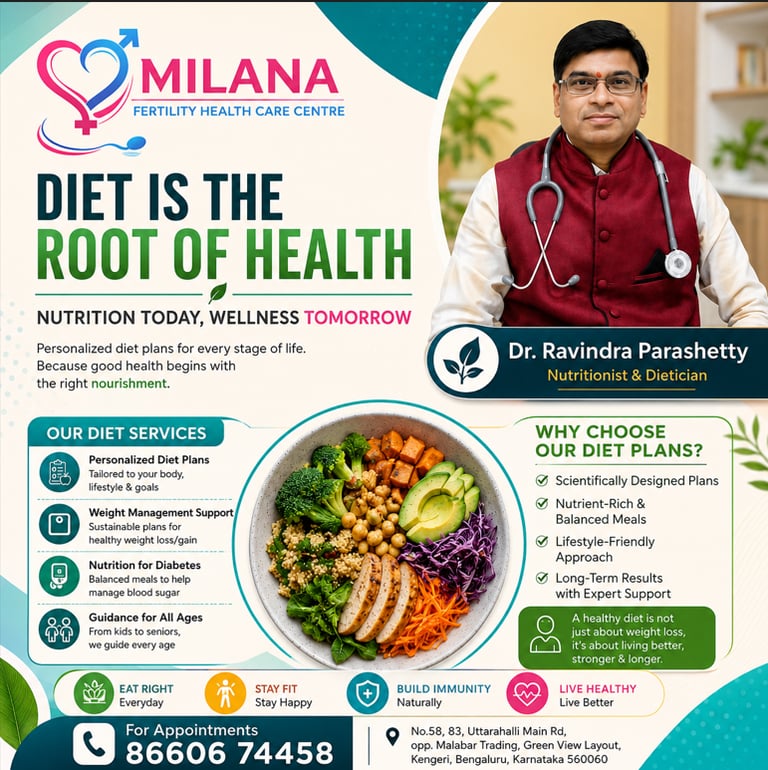
A healthy life begins with the right nutrition. Every meal you eat influences your energy, immunity, metabolism, mental well-being, and long-term health. Good nutrition is not about following strict diets or avoiding your favourite foods. It is about making balanced, informed food choices that support your body's needs at every stage of life.
At Milana Fertility Health Care Centre, Dr. Ravindra Parashetty, Nutritionist & Dietician, provides scientifically planned diet programmes that are designed according to each individual's health condition, lifestyle, age, and personal goals. Whether your objective is weight management, diabetes control, fertility nutrition, pregnancy care, or overall wellness, a personalised nutrition plan can help you achieve sustainable results.
Unlike temporary diet trends, professional nutrition counselling focuses on creating healthy habits that are practical, enjoyable, and easy to maintain for years.
Why Nutrition Matters
The food you consume supplies your body with essential nutrients required for growth, repair, hormone production, immunity, and energy. Poor eating habits gradually increase the risk of obesity, diabetes, hypertension, digestive disorders, hormonal imbalance, heart disease, and nutritional deficiencies.
A balanced diet supports:
Healthy body weight
Better digestion
Improved immunity
Stable blood sugar levels
Strong bones and muscles
Healthy skin and hair
Better sleep quality
Improved mental concentration
Increased daily energy
Reduced risk of lifestyle diseases
Healthy eating is not only beneficial during illness but also plays a major role in disease prevention.
Personalised Diet Planning
Every individual has different nutritional requirements. Age, occupation, activity level, medical history, metabolism, food preferences, allergies, cultural habits, and health conditions all influence dietary needs.
A personalised diet plan is prepared after evaluating:
Current health condition
Body composition
Weight goals
Medical history
Existing medications
Blood reports (when required)
Daily routine
Exercise habits
Food preferences
Sleep pattern
Stress levels
This approach ensures that the nutrition plan is realistic and sustainable.
Nutrition for Weight Management
Weight management is one of the most common reasons people seek dietary consultation.
Crash dieting often results in temporary weight loss followed by weight regain. Sustainable weight management focuses on improving eating habits rather than severe calorie restriction.
Professional weight management includes:
Healthy calorie balance
Portion control
Meal timing
Protein optimisation
Healthy carbohydrate selection
Good fat intake
Fibre-rich foods
Hydration guidance
Lifestyle modifications
Physical activity recommendations
The objective is gradual, healthy, and long-term weight management.
Nutrition for Diabetes
Medical nutrition therapy plays a crucial role in diabetes management.
A structured diabetic diet helps:
Maintain stable blood glucose levels
Reduce sugar spikes
Improve insulin sensitivity
Maintain healthy body weight
Reduce complications
Improve energy levels
Diet planning includes balanced carbohydrates, lean proteins, fibre-rich vegetables, healthy fats, and appropriate meal timing.
Each diabetic patient requires an individualised meal plan depending on age, medication, activity level, and blood sugar pattern.
Nutrition During Fertility Treatment
Nutrition significantly influences reproductive health in both men and women.
Proper nutrition may support:
Hormonal balance
Egg quality
Sperm quality
Healthy body weight
Ovulation
Reproductive wellness
Overall metabolic health
A fertility-focused nutrition plan includes balanced proteins, vitamins, minerals, antioxidants, healthy fats, and essential micronutrients while reducing excessive processed foods and unhealthy eating habits.
Pregnancy Nutrition
Pregnancy is one of the most important stages requiring proper nutritional guidance.
During pregnancy, nutritional requirements increase to support both mother and baby's health.
A pregnancy diet generally focuses on:
Protein intake
Iron-rich foods
Calcium sources
Folic acid support
Healthy weight gain
Hydration
Fibre intake
Essential vitamins
Balanced energy intake
Professional dietary guidance helps meet nutritional requirements safely throughout pregnancy.
Postpartum Nutrition
After childbirth, the mother's body requires adequate nutrition for recovery and breastfeeding.
Postpartum dietary counselling may include:
Recovery nutrition
Iron-rich foods
Calcium intake
Protein-rich meals
Hydration
Energy restoration
Weight management after delivery
Breastfeeding nutrition support
Healthy postpartum nutrition promotes faster recovery and overall well-being.
Nutrition for PCOS
Women with Polycystic Ovary Syndrome (PCOS) often benefit from structured dietary management.
Nutrition planning may help support:
Healthy weight
Hormonal balance
Blood sugar regulation
Insulin resistance management
Better energy
Improved lifestyle habits
Diet recommendations usually focus on balanced meals, high-fibre foods, lean proteins, healthy fats, and limiting highly processed foods.
Nutrition for Children
Children require balanced nutrition for healthy growth and development.
Proper dietary planning supports:
Growth
Brain development
Strong bones
Better immunity
Healthy eating habits
School performance
Physical development
Parents also receive guidance on healthy meal planning and reducing excessive junk food consumption.
Nutrition for Teenagers
Teenage years involve rapid physical and hormonal changes.
A balanced diet supports:
Growth spurts
Muscle development
Academic performance
Sports performance
Hormonal health
Healthy body weight
Proper nutrition during adolescence builds lifelong healthy habits.
Nutrition for Adults
Busy lifestyles often result in irregular eating patterns.
Professional nutrition guidance helps adults manage:
Office lifestyle
Weight gain
Stress eating
Digestive problems
Fatigue
High cholesterol
Blood pressure
Diabetes prevention
Simple dietary improvements can significantly improve daily health.
Nutrition for Senior Citizens
Older adults require specialised nutrition due to changing metabolism and health conditions.
Senior nutrition focuses on:
Bone health
Muscle preservation
Heart health
Digestive comfort
Diabetes management
Blood pressure control
Immunity
Healthy ageing
Balanced meals improve quality of life and maintain independence.
Lifestyle Nutrition Counselling
Healthy eating goes beyond food selection.
Lifestyle counselling includes:
Meal scheduling
Healthy snacking
Sleep hygiene
Physical activity
Hydration
Mindful eating
Stress management
Reading food labels
Grocery planning
Healthy cooking practices
These habits contribute to lasting health improvements.
Importance of Balanced Meals
A balanced meal generally includes:
Whole grains
Fresh vegetables
Fruits
Lean protein
Healthy fats
Dairy or suitable alternatives
Adequate water
Balanced nutrition ensures the body receives essential nutrients without excess calories.
Healthy Eating Tips
Simple habits can improve nutrition significantly:
Eat breakfast regularly.
Include vegetables in every meal.
Choose whole grains.
Drink sufficient water.
Limit sugary beverages.
Reduce processed foods.
Eat fruits daily.
Avoid overeating.
Include protein in every meal.
Practice portion control.
Small changes consistently followed often produce meaningful health benefits.
Nutrition and Immunity
Strong immunity depends greatly on balanced nutrition.
Foods rich in vitamins, minerals, antioxidants, protein, and healthy fats support normal immune function.
Adequate sleep, hydration, regular exercise, and stress management further contribute to overall immune health.
Common Nutrition Mistakes
Many people unknowingly make dietary mistakes such as:
Skipping meals
Following extreme diets
Eating excessive processed foods
Drinking insufficient water
Overconsuming sugary snacks
Eating too quickly
Ignoring portion sizes
Frequent late-night eating
Professional guidance helps correct these habits safely.
Benefits of Professional Diet Consultation
Working with a qualified nutritionist offers several advantages:
Individualised meal planning
Practical dietary guidance
Evidence-based recommendations
Sustainable lifestyle changes
Better disease management
Regular progress monitoring
Nutritional education
Improved confidence in food choices
Personalised care is more effective than one-size-fits-all diet plans.
Who Can Benefit?
Diet consultation may be beneficial for:
Children
Teenagers
Adults
Senior citizens
Pregnant women
Breastfeeding mothers
Individuals with diabetes
People with obesity
Individuals with PCOS
Those planning pregnancy
Fitness enthusiasts
Individuals seeking healthier lifestyles
Long-Term Wellness Through Nutrition
Good nutrition is an investment in long-term health. Healthy eating habits support physical wellness, emotional well-being, productivity, and quality of life.
Rather than focusing on temporary dieting, developing balanced eating habits can help maintain good health for years to come. Professional nutrition counselling empowers individuals to make informed food choices that align with their personal health goals.
Frequently Asked Questions (FAQs)
1. Why should I consult a dietician?
A qualified dietician provides personalised nutritional guidance based on your health condition, lifestyle, and goals.
2. Can diet alone help with weight management?
Healthy eating combined with regular physical activity and lifestyle changes supports sustainable weight management.
3. Is a personalised diet better than online diet charts?
Yes. Personalised plans consider your medical history, metabolism, and food preferences, making them more practical and effective.
4. Can nutrition help manage diabetes?
A balanced diabetic meal plan can support blood sugar management as part of an overall treatment plan recommended by your healthcare provider.
5. Do pregnant women require a special diet?
Yes. Pregnancy increases nutritional requirements, and dietary guidance helps meet these needs appropriately.
6. Is healthy food always expensive?
No. Balanced nutrition can be achieved using many affordable, locally available foods.
7. How often should a diet plan be reviewed?
Regular follow-up allows adjustments based on progress, health changes, and evolving nutritional needs.
8. Can children benefit from nutrition counselling?
Yes. Healthy eating during childhood supports growth, immunity, and long-term wellness.
9. Is it necessary to stop eating favourite foods?
No. Most personalised diet plans focus on moderation and balanced choices rather than complete restriction.
10. Why is long-term nutrition planning important?
Consistent healthy eating habits support disease prevention, sustained energy, healthy weight, and overall quality of life.